How are Public Schools Funded in North Carolina?
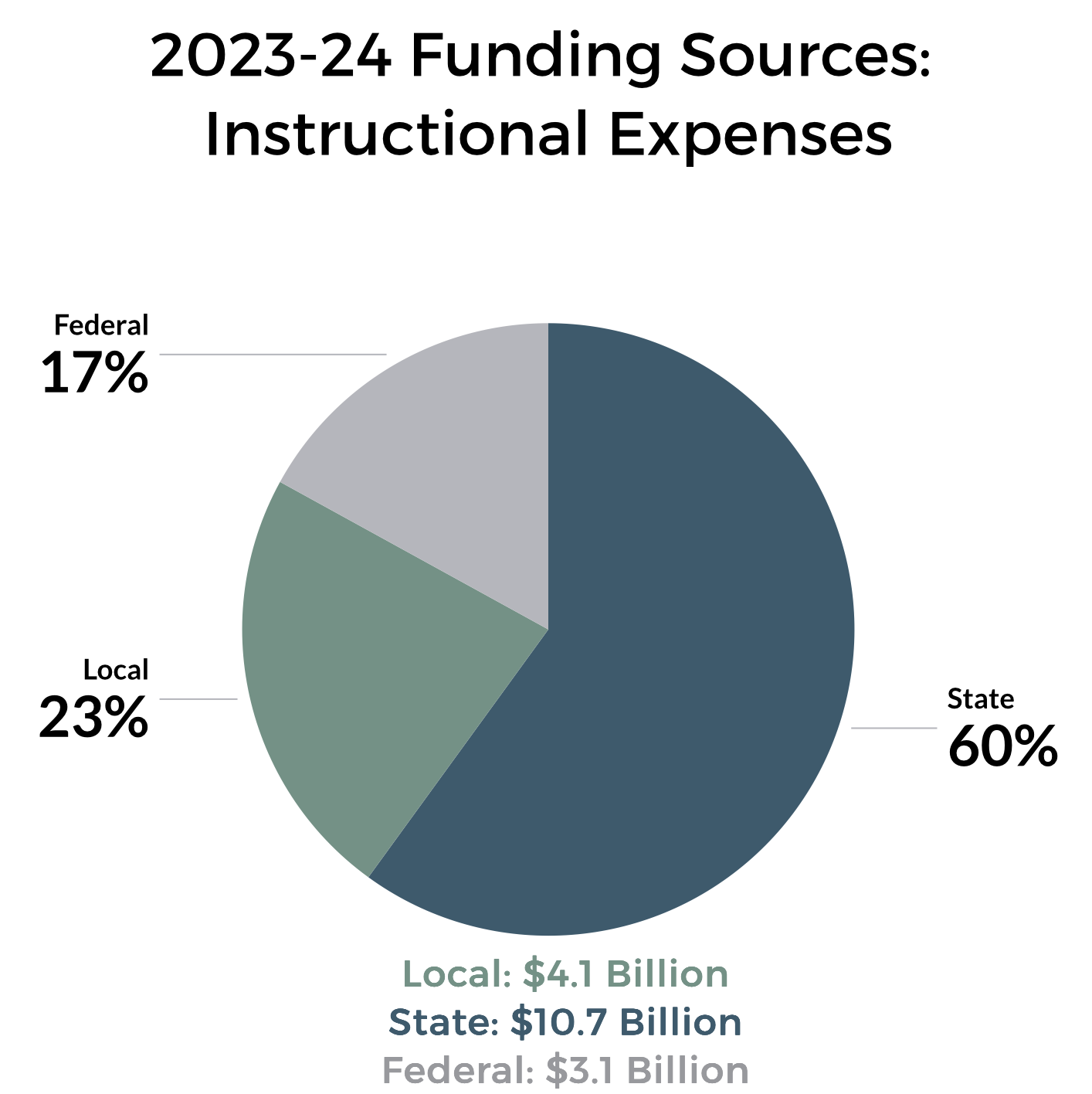
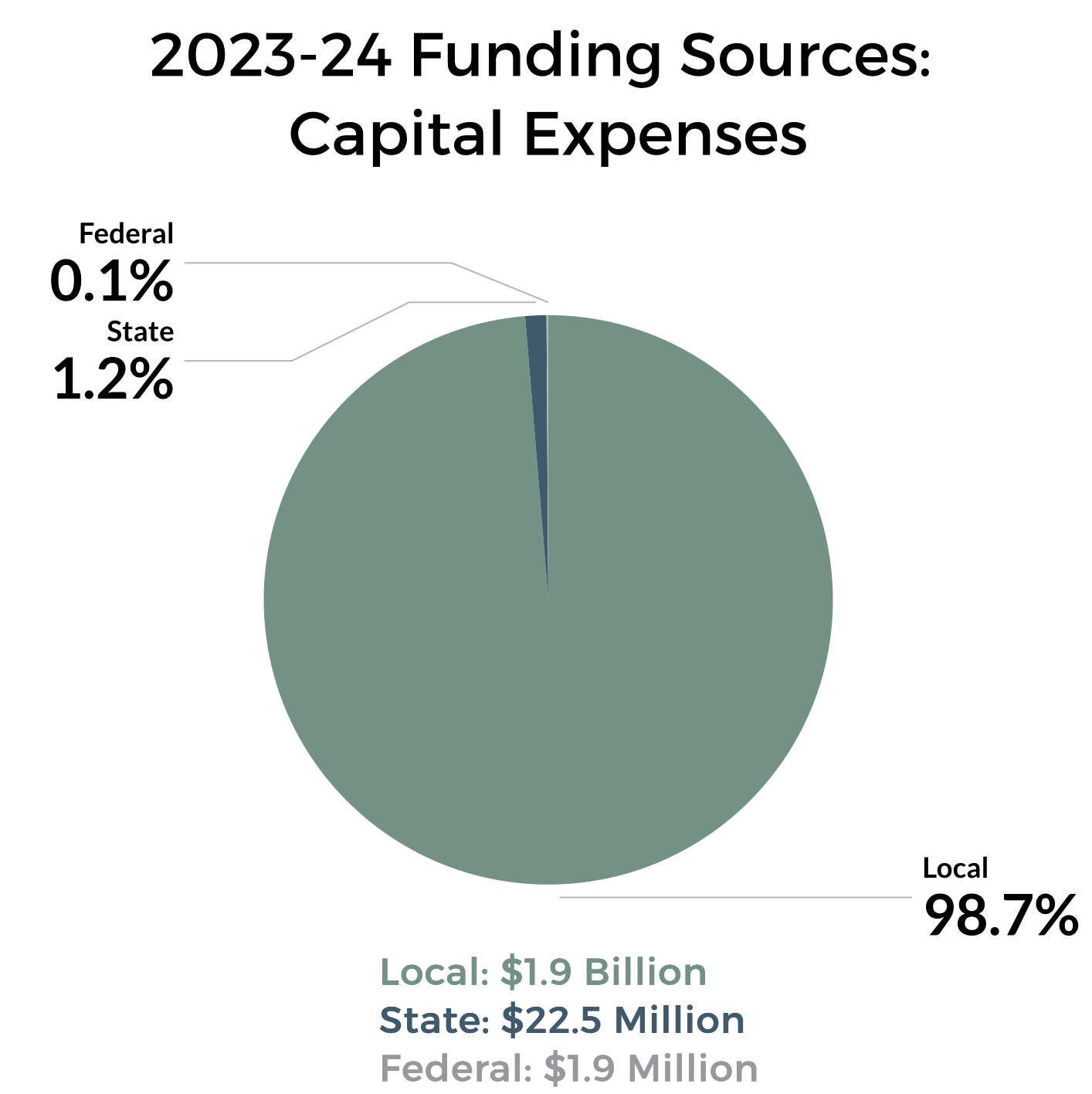
Under North Carolina’s school finance system, established nearly nine decades ago, it is the state’s responsibility to fund instructional and operational expenses (including personnel, instructional materials, transportation, and more) while county governments are responsible for the cost of capital expenses (buildings and maintenance). While the state bears responsibility for fulfilling its constitutional obligation of providing a sound basic education to every child, North Carolina schools have three sources of funding. In the 2023-24 school year, North Carolina public schools spent over $18 billion on instructional expenses, using a combination of state, federal, and local resources. State funding accounted for 60% of expenditures, federal funding accounted for 17%, and local funding accounted for 23% of spending. In the same year, 98.7% of capital expenses were paid by local governments.
The nearly century-old division of state and local responsibility for school funding still shapes the way North Carolina pays for public education today. However, this division has eroded somewhat as counties have had to take on an increasing role in funding instructional expenses. In 2023-24, counties funded 15.4% of principal and assistant principal positions, 6.2% of teachers, 9.5% of teacher assistants, and 20.6% of professional instructional support personnel; and the state funded 1.2% of capital expenses.
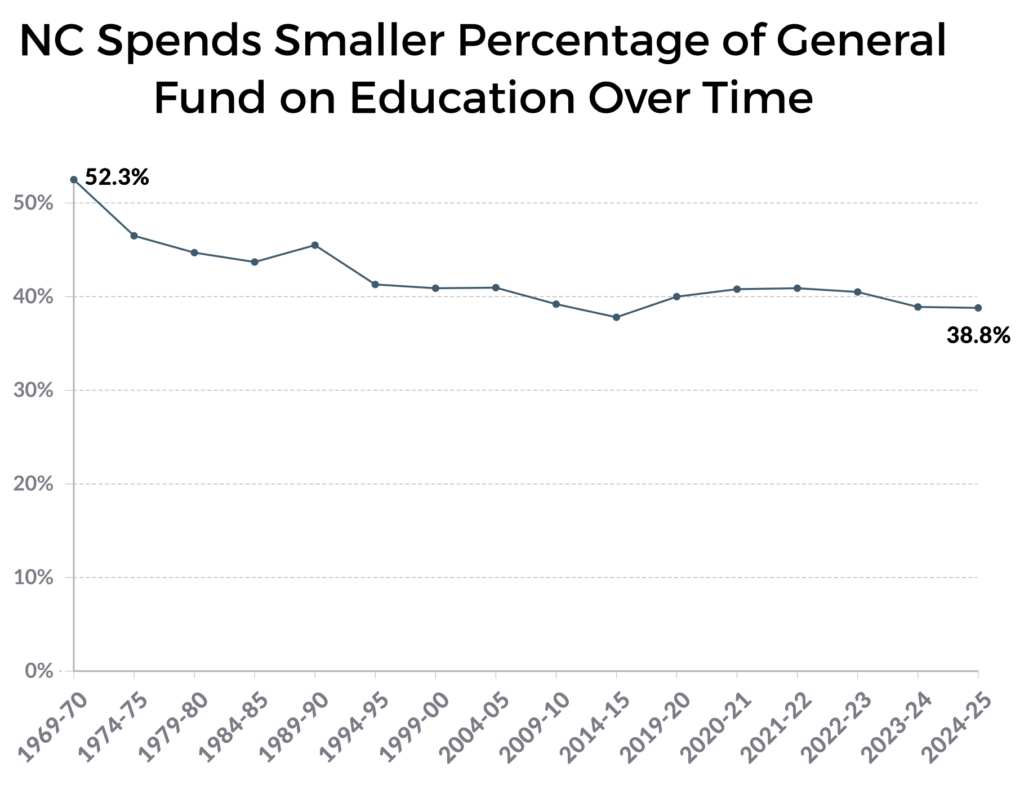
When looking at actual dollars spent, state funding for school operations has increased from $3.44 billion in 1992-93 and represents the largest part of the state’s budget. But while the level of funding has increased over time due to enrollment and cost increases, the percentage of the state’s General Fund dedicated to education has declined sharply since 1970. In 2024-25, 38.8% of the state’s General Fund was appropriated for K-12 public education, a significant drop from 1970, when it was 52.5%.